
Behind a Door at Kew Is a Hidden World of 1.25 Million Fungi |
For the first time, visitors can enter Kew’s extraordinary Fungarium and see the collections normally kept behind the scenes |
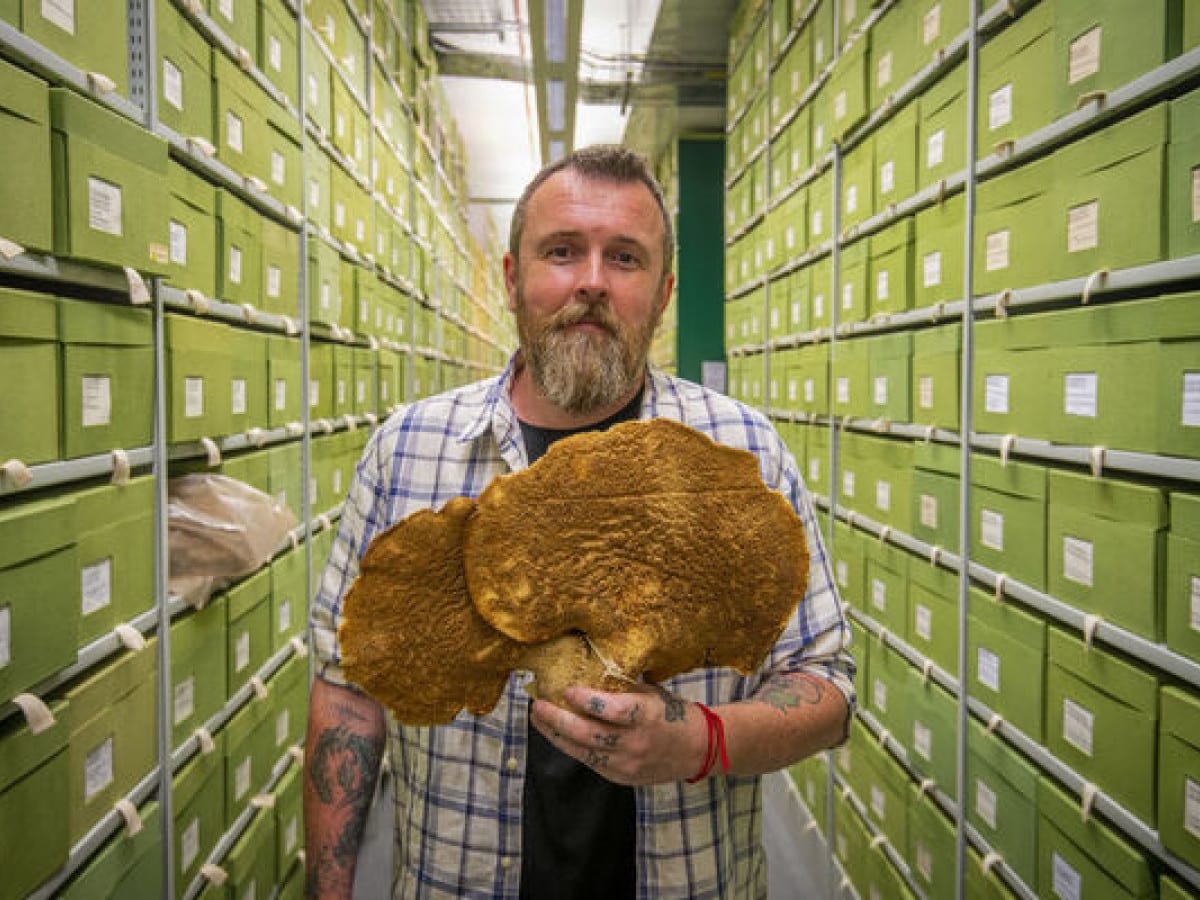
Most people go to Kew Gardens for trees, glasshouses, flowers and the pleasure of disappearing into green space for a few hours.
Far fewer know that beneath its scientific life sits one of the world’s great fungal collections.
Kew’s Fungarium houses more than 1.25 million dried specimens of mushrooms, moulds and yeasts, some dating back centuries and some collected by figures including Charles Darwin.
This autumn, for the first time, Kew is opening the Fungarium to members of the public through a limited series of behind-the-scenes tours.
It is exactly the sort of London experience that makes you wonder how you managed not to know it existed.
The 45-minute tours are led by Fungarium Collections Manager Lee Davies and take small groups into a working scientific collection normally hidden from everyday visitors.
There, rows of drawers hold specimens used to identify newly discovered species, study relationships between fungi and plants, investigate climate change and support research into potential medicines.
This is not simply a cabinet of curiosities.
It is an active research resource, and the scale of it changes the way you think about organisms most of us notice only when a mushroom appears after rain.
Kew has built a wider autumn programme around that hidden world, making fungi unusually visible across October.
Visitors can learn to draw and paint mushrooms with botanical artist Lucy T Smith, explore goldwork embroidery inspired by oyster mushrooms, or join specialist walks looking closely at lichens and the tiny ecosystems they create.
There are also Plant Horror Tours devoted to species with unsettling adaptations, from carnivorous flora to parasitic fungi.
The result is a clever blend of science, beauty, craft and just enough strangeness to make the subject irresistible.
Kew’s approach is particularly appealing because it does not reduce nature to something decorative.
It invites visitors to look more closely at systems that are easy to overlook but essential to how ecosystems function.
For Londoners who like learning without feeling as though they have signed up for a lecture, that combination is difficult to beat.
You arrive expecting a garden and leave thinking about an invisible kingdom beneath your feet.
The Fungarium tours run on selected Tuesdays until 27 October and are intentionally small, so this is one discovery worth booking rather than merely bookmarking. |
0 Comments
Join the conversation
Be the first to comment
Share your thoughts above.